Beginning with Customer Segmentation in Market Analysis, the narrative unfolds in a compelling and distinctive manner, drawing readers into a story that promises to be both engaging and uniquely memorable.
Customer segmentation is a crucial aspect of market analysis, delving into the intricate details of consumer behavior through various segmentation strategies. By dissecting the market into distinct segments based on different criteria, businesses gain valuable insights that drive their marketing efforts and overall success.
Introduction to Customer Segmentation
Customer segmentation is the process of dividing a market into distinct groups of consumers with similar characteristics, behaviors, or needs. This technique is crucial in market analysis as it allows businesses to tailor their products, services, and marketing strategies to specific target audiences, ultimately increasing customer satisfaction and driving sales.Customer segmentation helps in understanding consumer behavior by providing insights into what motivates different groups of customers to make purchasing decisions.
By identifying common traits and preferences among segments, businesses can create more personalized and targeted campaigns that resonate with their target audience.
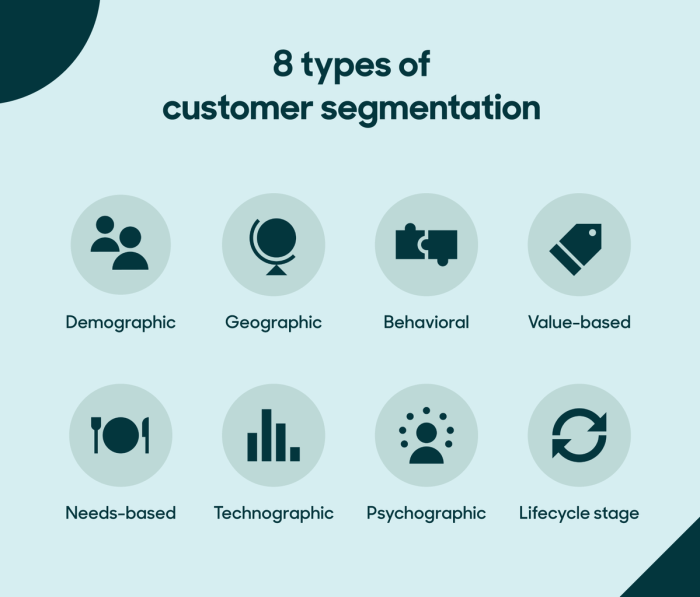
Types of Customer Segmentation Strategies
- Demographic Segmentation: Dividing customers based on demographics such as age, gender, income, education, and occupation.
- Psychographic Segmentation: Categorizing customers based on lifestyle, personality, values, interests, and attitudes.
- Behavioral Segmentation: Segmenting customers according to their buying patterns, usage behavior, brand loyalty, and decision-making process.
- Geographic Segmentation: Grouping customers based on their location, such as region, city, climate, or population density.
Demographic Segmentation
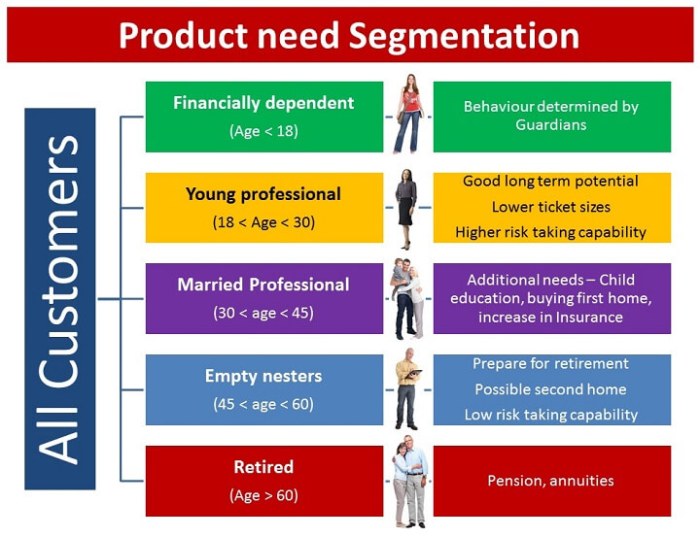
Demographic segmentation is a key strategy in market research that involves dividing a market into distinct groups based on demographic factors such as age, gender, income, education, occupation, marital status, and more. This type of segmentation helps businesses better understand their customers and tailor their marketing strategies to target specific groups effectively.
Key Demographic Factors
Demographic segmentation utilizes various key factors to categorize customers into different segments. These factors include:
- Age: Dividing customers based on their age range, such as millennials, Generation X, or baby boomers.
- Gender: Targeting customers based on their gender identity.
- Income: Segmenting customers by their income levels, such as low-income, middle-income, or high-income earners.
- Education: Classifying customers based on their educational background or qualifications.
- Occupation: Grouping customers according to their profession or job role.
Role in Market Research
Demographic segmentation plays a crucial role in market research by enabling businesses to identify specific customer groups with distinct characteristics and needs. By understanding the demographics of their target audience, businesses can create personalized marketing campaigns, develop products that cater to specific demographics, and enhance customer engagement. This approach helps companies improve customer satisfaction, increase brand loyalty, and ultimately drive sales and revenue.
Psychographic Segmentation
Psychographic segmentation involves dividing customers based on their psychological traits, lifestyle choices, values, beliefs, interests, attitudes, and behaviors. This segmentation strategy goes beyond demographics to understand the motivations and preferences that drive consumer decisions.
Examples of Psychographic Variables
- Lifestyle: Segmenting customers based on activities, interests, opinions, and values they prioritize in their daily lives.
- Interests: Grouping customers according to hobbies, passions, and areas of focus that shape their purchasing decisions.
- Values: Classifying customers based on their ethical, social, and moral principles that influence their brand loyalty and product preferences.
Significance in Market Analysis
Psychographic segmentation provides a deeper understanding of consumer behavior by uncovering the emotional and psychological drivers behind purchasing decisions. By identifying the values, interests, and lifestyle choices of different customer segments, businesses can tailor their marketing strategies to resonate with the target audience effectively. This personalized approach can lead to increased customer satisfaction, loyalty, and engagement, ultimately driving sales and profitability.
Behavioral Segmentation
Behavioral segmentation is a market analysis strategy that categorizes customers based on their behavior towards a product or service. This approach focuses on understanding how customers interact with a brand, make purchasing decisions, and use the products. By analyzing these behaviors, businesses can tailor their marketing strategies to better target specific customer groups, ultimately leading to increased sales and customer satisfaction.
Different Behavioral Segmentation Variables
- Purchase History: This variable examines how frequently a customer makes purchases, the types of products they buy, and the average amount spent per transaction. By analyzing purchase history, businesses can identify loyal customers, high-value customers, and those who may need incentives to make repeat purchases.
- Loyalty: Loyalty segmentation focuses on customers’ commitment to a brand or product. By categorizing customers based on their loyalty levels, businesses can develop loyalty programs, personalized offers, and targeted communication to retain existing customers and encourage repeat purchases.
- Usage Occasion: This variable looks at when and how customers use a product or service. Understanding usage occasions helps businesses create marketing campaigns tailored to specific times or events when customers are more likely to make a purchase. For example, promoting sunscreen products before the summer season.
Predicting Customer Buying Patterns
Behavioral segmentation plays a crucial role in predicting customer buying patterns. By analyzing how customers behave in response to marketing initiatives, businesses can anticipate future purchasing decisions and adjust their strategies accordingly. For example, if customers who frequently purchase a certain product tend to buy related accessories as well, businesses can create bundle offers to increase sales. Additionally, tracking customer engagement with promotional campaigns can help businesses identify patterns that indicate future buying behavior, allowing for targeted marketing efforts.
Geographic Segmentation
Geographic segmentation is a crucial aspect of market research that involves dividing a market based on the physical location or region of customers. This type of segmentation allows businesses to target specific areas with tailored marketing strategies to meet the unique needs and preferences of customers in those regions.
Importance of Location-Based Customer Segmentation
Geographic segmentation is essential for businesses looking to understand the geographical distribution of their customer base. By analyzing factors such as climate, population density, urban or rural areas, and cultural differences, businesses can create targeted marketing campaigns that resonate with customers in specific locations. This approach helps in maximizing the impact of marketing efforts and increasing the relevance of products or services to different geographic segments.
- Identifying Regional Preferences: Geographic segmentation helps businesses identify regional preferences and trends, allowing them to customize their products or services to better suit the needs of customers in different locations.
- Localized Marketing Campaigns: By tailoring marketing campaigns to specific regions, businesses can create localized messages that resonate with customers on a more personal level. This can lead to higher engagement and conversion rates.
- Optimizing Distribution Channels: Understanding the geographic distribution of customers helps businesses optimize their distribution channels, ensuring products are readily available in high-demand areas.
- Adapting to Cultural Differences: Geographic segmentation also enables businesses to adapt their marketing strategies to account for cultural differences in various regions, ensuring messages are well-received and culturally appropriate.
Market Analysis Techniques
Market analysis techniques are crucial for businesses to understand customer segments and make informed decisions. By analyzing market data, companies can identify opportunities and tailor their products or services to meet the needs of specific customer groups.
Qualitative and Quantitative Market Research Approaches
Qualitative market research involves gathering insights and opinions through methods like surveys, interviews, and focus groups. This approach provides in-depth understanding of customer preferences, behaviors, and motivations. On the other hand, quantitative market research relies on numerical data and statistical analysis to draw conclusions. It involves surveys, data mining, and experiments to measure market trends and customer satisfaction.
- Qualitative research focuses on understanding the ‘why’ behind customer behavior, while quantitative research emphasizes the ‘what’ and ‘how much’.
- Qualitative research is exploratory in nature, uncovering new insights, while quantitative research validates hypotheses and quantifies data.
- Combining both approaches can provide a comprehensive understanding of customer segments and market dynamics.
Role of Market Segmentation in Identifying Target Markets
Market segmentation is the process of dividing a market into distinct groups based on demographics, psychographics, behaviors, or geography. This helps businesses target specific customer segments with tailored marketing strategies and product offerings.
- By segmenting the market, companies can identify the most profitable customer groups and allocate resources effectively.
- Market segmentation enables businesses to personalize their marketing messages, leading to higher customer engagement and loyalty.
- Understanding customer segments through market analysis allows businesses to adapt to changing market trends and stay ahead of competitors.
In conclusion, customer segmentation in market analysis is a powerful tool that enables businesses to target specific customer groups effectively. By understanding the diverse needs and preferences of consumers through demographic, psychographic, behavioral, and geographic segmentation, companies can tailor their marketing strategies for maximum impact. Embracing market analysis techniques and segmentation methods opens up a world of opportunities for organizations to thrive in today’s competitive landscape.
Commonly Asked Questions
What is the importance of psychographic segmentation in market analysis?
Psychographic segmentation delves into the values, interests, and lifestyles of consumers, providing deeper insights into their motivations and behaviors. Understanding psychographics helps businesses create targeted marketing campaigns that resonate with specific customer segments.
How does behavioral segmentation contribute to predicting customer buying patterns?
Behavioral segmentation analyzes customer purchase history, loyalty, and usage occasions to anticipate future buying behaviors. By identifying patterns and trends in consumer behavior, businesses can tailor their marketing strategies to meet the evolving needs of their target audience.
Why is geographic segmentation important in tailoring marketing campaigns?
Geographic segmentation allows businesses to customize their marketing efforts based on the location-specific preferences and characteristics of consumers. By targeting customers in specific regions, companies can deliver messages and promotions that are relevant and engaging to their target audience.


