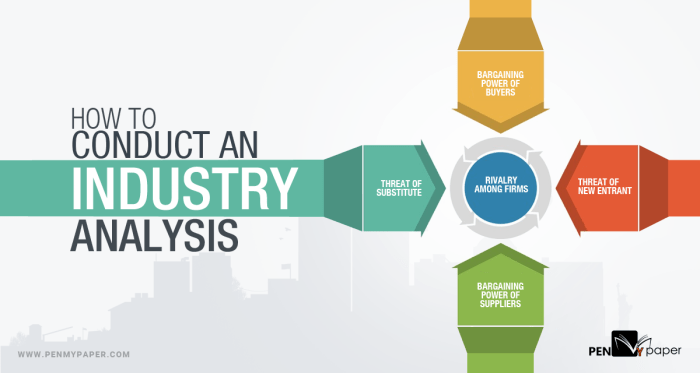
Embark on a journey into Market Research for Industry Analysis, exploring its pivotal role in shaping business strategies and decisions.
Delve deeper into the realm of market analysis, research methodologies, and strategies to navigate market volatility with finesse.
Market Analysis
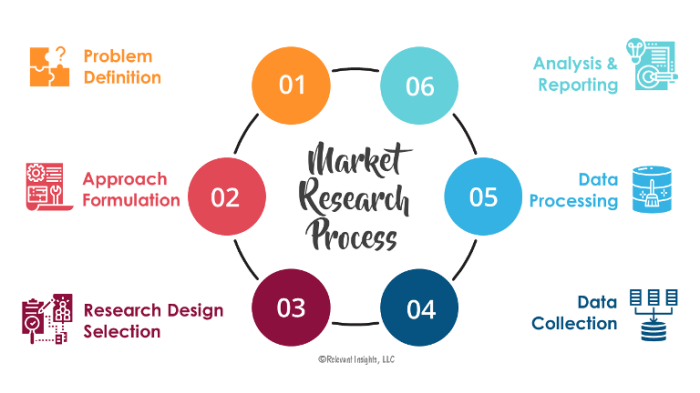
Market analysis is a crucial component for businesses to understand their industry, customers, and competitors in order to make informed decisions. By conducting a comprehensive market analysis, companies can gain valuable insights that can shape their strategies and drive growth.
Key Components of Market Analysis
- Market Size: Determining the total size of the market and potential for growth.
- Market Trends: Identifying patterns and shifts in consumer behavior, technology, and regulations.
- Competitive Analysis: Assessing strengths, weaknesses, opportunities, and threats posed by competitors.
- Target Market: Defining the specific segment of the market to focus on based on demographics, psychographics, and behavior.
- SWOT Analysis: Evaluating internal strengths and weaknesses, as well as external opportunities and threats.
Strategic Decision-Making
Market analysis plays a vital role in strategic decision-making by providing the necessary data and insights to make informed choices. It helps businesses identify opportunities for growth, mitigate risks, and stay ahead of the competition. By understanding market dynamics and consumer preferences, companies can tailor their products, services, and marketing strategies to meet the needs of their target audience effectively.
Methods Used in Market Analysis
- Primary Research: Conducting surveys, interviews, and focus groups to gather firsthand data.
- Secondary Research: Analyzing existing sources such as reports, articles, and databases for industry information.
- Market Segmentation: Dividing the market into distinct groups based on common characteristics and behaviors.
- Trend Analysis: Studying historical data and projections to forecast future market trends.
- Competitor Benchmarking: Comparing performance metrics and strategies with direct competitors to identify areas for improvement.
Market Research
Market research is a crucial step in understanding the dynamics of a particular market. It involves gathering and analyzing information about consumers, competitors, and the overall industry to make informed business decisions.
Conducting Market Research
Market research can be conducted through primary or secondary methods. Primary research involves collecting data directly from the source, such as surveys, interviews, or focus groups. Secondary research, on the other hand, involves analyzing existing data from sources like industry reports, government publications, or online databases.
Primary Market Research Methods
- Surveys: Gathering data directly from consumers through questionnaires.
- Interviews: Conducting one-on-one discussions with target customers to gather insights.
- Focus Groups: Bringing together a small group of individuals to discuss a product or service in depth.
Secondary Market Research Methods
- Industry Reports: Analyzing reports published by research firms or industry associations.
- Government Publications: Utilizing data provided by government agencies related to the industry.
- Online Databases: Accessing online resources like databases or libraries to gather relevant information.
Significance of Market Research in Understanding Consumer Behavior
Market research helps businesses understand consumer preferences, purchasing behavior, and trends. By analyzing this data, companies can tailor their products or services to meet the needs of their target audience effectively.
How Market Research Aids in Product Development
Market research provides valuable insights into consumer demands, competitor offerings, and market gaps. By understanding these factors, businesses can develop products that are more likely to succeed in the market and meet the needs of their customers effectively.
Market Volatility
Market volatility refers to the rapid and unpredictable changes in the prices of assets or securities in the market. This can have a significant impact on industries, affecting their profitability, investment decisions, and overall stability. Companies operating in volatile markets need to be prepared to navigate through uncertainty and mitigate risks effectively.
Impact of Market Volatility on Industries
Market volatility can lead to fluctuations in demand, supply chain disruptions, and increased production costs for industries. This can result in challenges such as reduced consumer confidence, lower revenues, and difficulties in forecasting future trends. Industries must implement strategies to adapt to these changes and remain competitive in turbulent market conditions.
- Implementing risk management practices: Industries can mitigate risks associated with market volatility by diversifying their investments, hedging against price fluctuations, and closely monitoring market trends. By identifying potential risks and developing contingency plans, businesses can safeguard themselves against unforeseen challenges.
- Enhancing flexibility and agility: To navigate through market volatility, industries should focus on enhancing their flexibility and adaptability. This includes adjusting production processes, optimizing inventory levels, and responding quickly to changing market conditions. By being agile, businesses can better respond to fluctuations and maintain operational efficiency.
- Building strong relationships with stakeholders: Establishing strong relationships with suppliers, customers, and other stakeholders can help industries navigate through market volatility. By fostering collaboration and communication, businesses can gain valuable insights, support, and resources to address challenges and seize opportunities in dynamic market environments.
Relationship between Market Volatility and Economic Factors
Market volatility is often influenced by various economic factors, such as interest rates, inflation, geopolitical events, and global trade dynamics. These factors can impact investor sentiment, market liquidity, and overall market stability. Industries need to closely monitor these economic indicators and analyze their implications to make informed decisions and manage risks effectively.
Understanding the interplay between market volatility and economic factors is crucial for industries to anticipate potential challenges and opportunities in the market.
Adapting to Market Volatility for Business Stability
To maintain stability amidst market volatility, businesses can adopt proactive strategies to adapt to changing market conditions and minimize disruptions. This includes investing in technology, fostering innovation, and diversifying revenue streams. By continuously monitoring market trends, analyzing data, and staying informed about industry developments, businesses can enhance their resilience and competitiveness in volatile market environments.
Utilizing Market Research
Market research is a crucial tool for businesses looking to make informed decisions about their products and services. By gathering data and insights from consumers, companies can better understand market trends, customer preferences, and competitive landscapes. Let’s delve into how businesses can effectively utilize market research to drive growth and stay ahead in the market.
Designing a Sample Market Research Survey for a New Product Launch
When launching a new product, conducting a market research survey can provide valuable insights into consumer preferences, needs, and expectations. Here is a sample survey design for a new skincare product:
- Demographic questions to understand the target market (age, gender, income level).
- Preference questions to gauge interest in specific skincare ingredients or benefits.
- Purchase intent questions to determine the likelihood of buying the new product.
- Feedback questions to gather suggestions for product improvements.
Steps Involved in Analyzing Market Research Data
Analyzing market research data involves several key steps to extract meaningful insights and make informed decisions:
- Organizing and cleaning the data to ensure accuracy and consistency.
- Identifying patterns and trends within the data through statistical analysis.
- Interpreting the findings to draw conclusions and actionable recommendations.
- Presenting the results in a clear and concise manner for stakeholders to understand.
Hypothetical Scenario Where Market Research Influences Business Growth
Imagine a tech company conducting market research on customer preferences for wearable devices. By identifying a growing demand for fitness trackers with advanced health monitoring features, the company decides to develop a new product line focused on health and wellness. This strategic move based on market research leads to increased sales and market share, driving business growth.
How Market Research Helps Businesses Stay Competitive in a Changing Market Landscape
In a rapidly evolving market landscape, businesses can leverage market research to adapt and stay competitive:
“Market research allows businesses to anticipate shifts in consumer behavior, identify emerging trends, and respond proactively to changes in the market.”
By continuously monitoring market dynamics, consumer preferences, and competitor strategies, businesses can make data-driven decisions that give them a competitive edge and ensure long-term success.
In conclusion, Market Research for Industry Analysis serves as a compass guiding businesses through the dynamic landscape of consumer behavior and economic fluctuations, ensuring adaptability and growth.
Clarifying Questions
What are the key components of comprehensive market analysis?
Key components include market trends, competitor analysis, consumer demographics, and pricing strategies.
How does market research aid in product development?
Market research provides insights into consumer preferences, demands, and trends, guiding product development to meet market needs effectively.
What strategies can businesses employ to adapt to market volatility?
Businesses can diversify their product offerings, adjust pricing strategies, and establish contingency plans to mitigate risks associated with market volatility.


