Embark on a journey into the world of Market Research for Small Businesses, where unlocking growth opportunities is the ultimate goal. Dive into the realm of strategies and insights that can propel small businesses to new heights.
Explore the vital role market research plays in shaping the success of small businesses, uncovering valuable benefits and overcoming common challenges along the way.
Overview of Market Research for Small Businesses
Market research is a crucial activity for small businesses looking to understand their target market, competition, and industry trends. By gathering and analyzing data, small businesses can make informed decisions to improve their products, services, and overall business strategy.
Importance of Market Research
Market research helps small businesses identify opportunities for growth, understand customer needs and preferences, and stay ahead of competitors. It provides valuable insights that can guide product development, marketing campaigns, and pricing strategies.
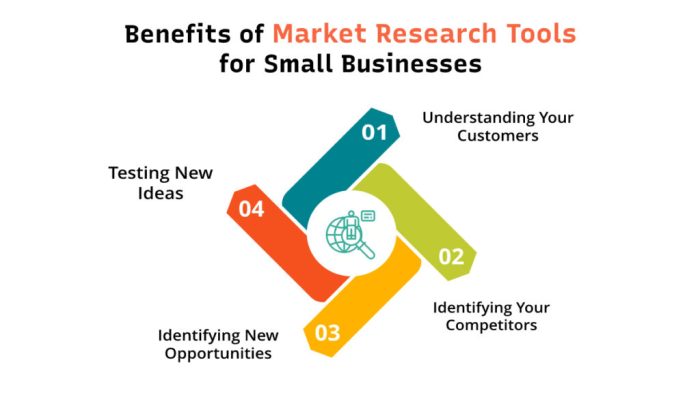
Key Benefits of Conducting Market Research
- Identifying new business opportunities
- Understanding customer behavior and preferences
- Evaluating market trends and competition
- Improving product offerings and marketing strategies
- Minimizing risks associated with business decisions
Common Challenges Small Businesses Face
- Lack of resources: Small businesses often have limited budgets and personnel to dedicate to market research.
- Access to data: Finding reliable sources of market data can be challenging for small businesses.
- Interpreting results: Understanding and analyzing complex market data can be difficult without the necessary expertise.
- Competing priorities: Small businesses may struggle to prioritize market research among other business activities.
Methods of Market Research

Market research is essential for small businesses to understand their target market, competition, and industry trends. There are various methods that small businesses can utilize to gather valuable insights for informed decision-making.
Primary Research Methods
Primary research involves collecting data directly from the source. Small businesses can use the following primary research methods:
- Surveys: Conducting surveys among target customers to gather feedback on products, services, and preferences.
- Interviews: One-on-one interviews with customers to delve deeper into their thoughts and behaviors.
- Focus Groups: Bringing together a small group of individuals to discuss specific topics related to the business.
- Observation: Directly observing customer behavior in-store or online to understand their actions and preferences.
Secondary Research Methods
Secondary research involves analyzing existing data and information. Small businesses can utilize the following secondary research methods:
- Market Reports: Accessing industry reports and market analysis from reliable sources to understand market trends.
- Competitor Analysis: Studying competitors’ websites, social media, and reviews to gather insights on their strategies.
- Government Data: Utilizing government databases and reports for demographic and economic data relevant to the business.
- Online Research: Using search engines and online databases to gather information on consumer behavior and industry trends.
Qualitative vs Quantitative Research Methods
- Focuses on understanding customer motivations, attitudes, and perceptions.
- Uses methods like interviews, focus groups, and observations.
- Provides in-depth insights but may not be statistically representative.
- Focuses on numerical data and statistical analysis.
- Uses surveys, questionnaires, and data analysis tools.
- Provides quantifiable data for statistical significance but may lack contextual insights.
Qualitative Research:
Quantitative Research:
Market Analysis Techniques
When it comes to market analysis for small businesses, there are several techniques that can be utilized to better understand market trends and customer behaviors.
Significance of SWOT Analysis
SWOT analysis is a crucial tool in market research for small businesses as it helps them identify their strengths, weaknesses, opportunities, and threats. By conducting a SWOT analysis, small businesses can gain valuable insights into their internal capabilities and external market conditions.
Using Competitor Analysis
Competitor analysis is another important technique for small businesses to gain a competitive edge. By studying their competitors, small businesses can identify gaps in the market, understand competitor strategies, and find ways to differentiate themselves.
Market Volatility and Its Impact
Market volatility refers to the rapid and unpredictable changes in the prices of assets in the market. For small businesses, market volatility can have significant implications on their operations, financial stability, and growth prospects. The impact of market volatility can be felt in various ways, affecting the decision-making process and overall performance of small businesses.
Examples of How Market Volatility Can Affect Small Businesses
- Fluctuations in supply chain costs: Sudden changes in raw material prices or transportation costs can directly impact small businesses, leading to increased expenses and reduced profit margins.
- Consumer behavior shifts: During periods of market volatility, consumer confidence may decrease, causing a decline in demand for products or services offered by small businesses.
- Access to funding: Uncertain market conditions can make it challenging for small businesses to secure loans or investments, hindering their growth and expansion plans.
Strategies for Small Businesses to Navigate Market Volatility Through Research and Analysis
- Conduct regular market research: Stay informed about market trends, consumer preferences, and competitive landscape to anticipate changes and adapt proactively.
- Diversify product offerings: Explore new market segments, introduce complementary products, or expand into different geographical regions to reduce reliance on a single market or product line.
- Build strong relationships with suppliers and partners: Establish solid partnerships with reliable suppliers and distributors to mitigate risks associated with supply chain disruptions during volatile market conditions.
- Monitor financial indicators: Keep a close eye on key financial metrics, such as cash flow, profitability, and debt levels, to assess the financial health of the business and make informed decisions in response to market fluctuations.
In conclusion, Market Research for Small Businesses serves as a powerful tool for navigating the dynamic business landscape, enabling companies to make informed decisions and stay ahead of the competition.
FAQ Resource
How can market research benefit small businesses?
Market research helps small businesses understand their customers, competition, and market trends, leading to informed decision-making and strategic planning.
What are some primary research methods suitable for small businesses?
Primary research methods for small businesses include surveys, interviews, focus groups, and observation techniques.
Why is SWOT analysis significant in market research for small businesses?
SWOT analysis helps small businesses identify internal strengths and weaknesses, as well as external opportunities and threats, guiding strategic planning and decision-making.
How can small businesses navigate market volatility?
Small businesses can navigate market volatility through thorough research, analysis of trends, and agile adaptation to changing market conditions.


